Remanufactured Brake Calipers: A Complete Guide for Shops and Vehicle Owners
Everything you need to know about remanufactured brake calipers: process, benefits, failure signs, and selection criteria for garages and fleets in Quebec and Ontario.
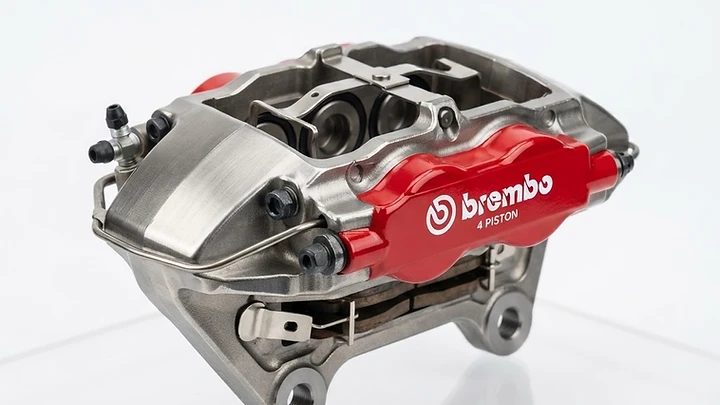
Remanufactured brake calipers are central to the safety of any vehicle. At Canada Calipers, we give new life to hydraulic and air calipers for cars, trucks, buses, and trailers, using a rigorous process that respects original tolerances. This guide explains what remanufacturing involves, why it's a smart alternative to new parts, and how to identify the right caliper for your application.
Whether you run an auto repair shop, a parts store, or a commercial fleet, understanding remanufacturing helps you cut costs while keeping your vehicles safe. Our workshop in Sainte-Thérèse serves all of Quebec and Ontario.
What is a remanufactured brake caliper?
A remanufactured brake caliper is a used caliper that has been fully disassembled, cleaned, inspected, rebuilt with new wear components (seals, pistons, bushings), and tested to restore its original function and reliability. Unlike a simple repair, remanufacturing addresses the entire component, not just the failed part.
The result is a caliper whose braking performance is comparable to a new part, at a significantly lower cost. It's especially attractive for older vehicles or applications where new-part supply is limited.
The remanufacturing process explained
Each caliper follows a structured process, adapted to its type (hydraulic or air):
- Initial inspection — assessing the body, pistons, and threads.
- Full disassembly — separating all components for complete access.
- Thorough cleaning — removing rust, deposits, and contaminants.
- Wear-component replacement — new seals, bushings, pistons, and boots.
- Rebuild and test — reassembly to tolerance and leak verification.
Learn more on our dedicated remanufactured brake calipers page.
Benefits of remanufactured calipers
Remanufacturing offers concrete advantages for Canadian shops and vehicle owners:
- Lower cost — generally priced below new parts, without compromising function.
- Availability — especially useful for older or less common vehicles.
- Smaller environmental footprint — reusing the metal body reduces waste and raw-material consumption. Read more in our article on remanufacturing and the environment.
- Core exchange — returning the old caliper can lower the overall cost.
Signs a caliper needs replacing
A faulty caliper compromises braking safety and should be addressed promptly. Watch for these signs:
- A spongy or soft brake pedal.
- Vehicle pulling to one side when braking.
- Persistent metallic noise or squealing.
- Brake fluid leak near a wheel.
- Uneven pad wear.
A professional diagnosis is recommended as soon as any of these symptoms appear.
How to identify the right caliper
To get the right part the first time, have the following information ready: year, make, model, engine, caliper position (front/rear, left/right), and if possible the OEM part number. The more precise these details, the faster the response.
For commercial fleets and heavy vehicles with air brakes, specify the vehicle type, application, and quantity. See our page on air calipers for buses and trailers.
Conclusion
Remanufactured brake calipers offer a practical balance of cost, availability, and performance. For garages, parts stores, and fleets across Quebec and Ontario, it's a sustainable solution worth considering at every replacement.
Also looking for remanufactured CV axles? See our full comparison.