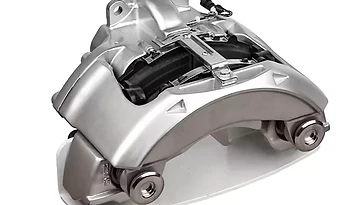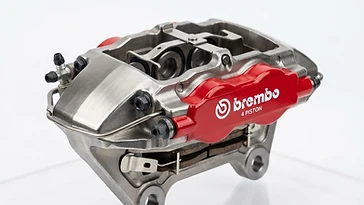
Remanufactured Air Calipers: Complete Guide for Fleets and Carriers
Complete guide to remanufactured air calipers for buses, trailers, and heavy trucks: remanufacturing process, benefits, failure signs, and part identification for carriers in Quebec and Ontario.
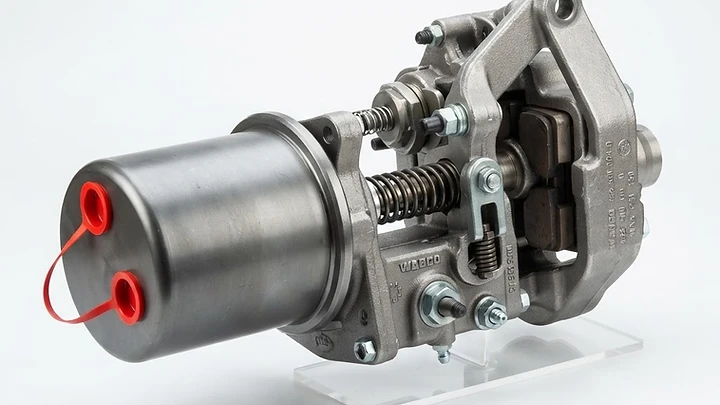
Remanufactured air calipers are at the heart of the braking system for heavy commercial vehicles. At Canada Calipers, we give new life to air calipers for buses, trailers, heavy trucks, and commercial fleets with a rigorous remanufacturing process. This guide explains everything carriers, fleet managers, and maintenance shops need to know about remanufactured air calipers in Quebec and Ontario.
Whether you manage a bus fleet, a trailer park, or heavy trucks, understanding air caliper remanufacturing helps you reduce maintenance costs while keeping your vehicles safe. Our workshop in Sainte-Thérèse serves all of Quebec and Ontario.
What is a remanufactured air caliper?
A remanufactured air caliper is a used caliper that has been fully disassembled, cleaned, inspected, rebuilt with new wear components (seals, pistons, springs), and tested to restore its original function and reliability. Unlike a simple repair, remanufacturing addresses the entire component, not just the failed part.
The result is an air caliper whose braking performance is comparable to a new part, at a significantly lower cost. It's especially advantageous for heavy vehicles where new-part costs are high and supply may be limited.
The air caliper remanufacturing process
Each air caliper follows a structured process, adapted to the demands of heavy pneumatic braking:
- Initial inspection — assessing the body, pistons, threads, and sealing surfaces.
- Full disassembly — separating all components for complete access.
- Thorough cleaning — removing rust, deposits, grease, and contaminants.
- Wear-component replacement — new seals, bushings, pistons, and springs.
- Rebuild and test — reassembly to tolerance and verification of pressure and sealing.
Learn more on our dedicated air calipers for buses and trailers page.
Benefits of remanufactured air calipers
Remanufacturing offers concrete advantages for Canadian carriers and fleet managers:
- Lower cost — generally priced below new parts, without compromising function or safety.
- Availability — especially useful for older or less common bus and trailer models.
- Smaller environmental footprint — reusing the metal body reduces waste and raw-material consumption. Read more in our article on remanufacturing and the environment.
- Core exchange — returning the old caliper can lower the overall cost.
- Faster turnaround — in-house remanufacturing often puts a caliper back in service faster than a new-part order.
Signs an air caliper needs replacing
A faulty air caliper compromises the braking safety of the heavy vehicle and should be addressed promptly. Watch for these signs:
- Prolonged brake response — a sign of pressure loss.
- Audible air leak near the caliper or lines.
- Air-system warning light on the dashboard.
- Abnormal braking noise — squeaking or hissing.
- Vehicle pulling to one side when braking.
- Uneven brake-pad wear.
For heavy vehicles, a professional diagnosis is essential at the first sign.
How to identify the right air caliper
To get the right part the first time, have the following information ready: vehicle type (bus, trailer, heavy truck), application (urban, road, intercity), quantity of units needed, and if possible the part number. For fleets, specify the number of units and the delivery schedule.
Air calipers for fleets: quantities and planning
Commercial fleet managers gain a significant advantage by planning air caliper remanufacturing. Rather than waiting for a failure, a preventive maintenance program allows batch remanufacturing of multiple calipers, reducing downtime and per-unit costs. Contact us to discuss volumes and delivery schedules tailored to your fleet.
Conclusion
Remanufactured air calipers offer a practical balance of cost, availability, and performance for buses, trailers, and heavy trucks. For carriers and fleets across Quebec and Ontario, it's a sustainable solution worth integrating into every maintenance program.
To understand how air brake systems work overall, see our article on air brake systems.